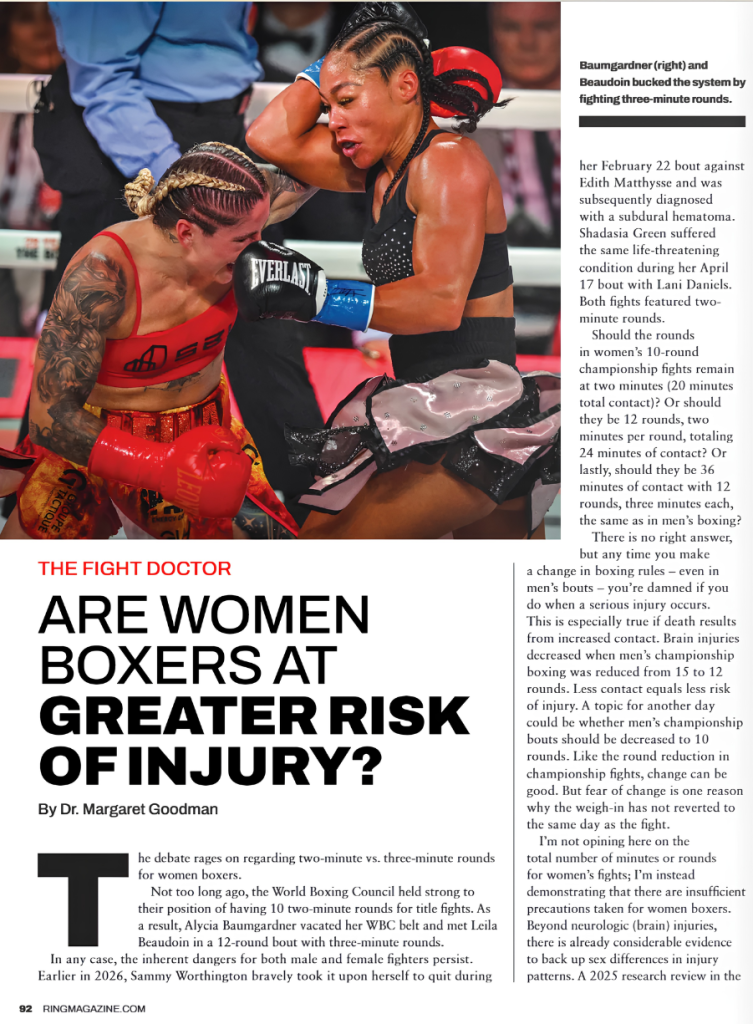
For years, the debate over women’s boxing rounds has been framed as a question of equality: shouldn’t female fighters compete under the same 12-round, three-minute standard as men? What’s been overlooked is that this isn’t just a fairness issue—it’s a safety crisis with real neurological consequences. When the World Boxing Council enforced a 10-round, two-minute format for women’s title fights, top champions like Alycia Baumgardner vacated their belts rather than accept it. Meanwhile, fighters competing under the shorter rounds are suffering life-threatening subdural hematomas at an alarming rate.
The real problem: there’s no clean answer. Extending rounds to match men’s boxing means more total contact time and potentially more brain trauma. But shortening rounds creates an uneven playing field where athletes have to choose between their belts and their safety. The evidence is sobering—when men’s championship boxing reduced rounds from 15 to 12, brain injuries actually decreased. This article examines why the boxing world remains stuck between two bad options, and what science tells us about the path forward. The stakes are nothing less than the long-term health of the sport’s female athletes.
Read the full piece to understand why this debate matters far more than any championship belt.